Purple flowers
A tribute to my favourite kind of flowers.
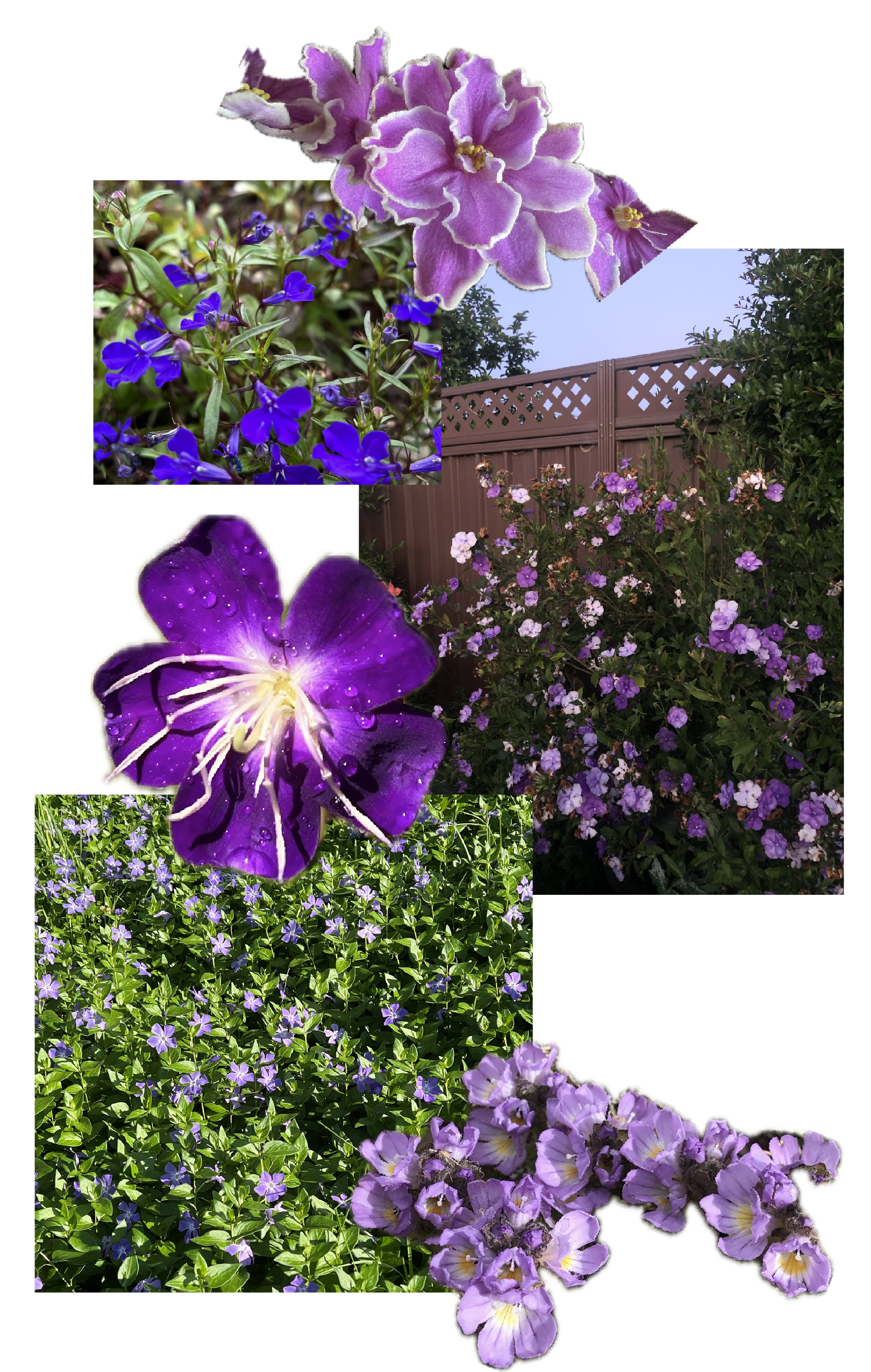
Isaac Newton supposedly believed that 7 was a cosmically significant number, as with the 7 notes of the musical scale. And so, when he was experimenting with diffraction, he included the 7th colour of the visible spectrum, indigo, for good luck.
Purple has historically been a symbol of royalty and luxury, because back in the day it was a very expensive textile dye that was only accessible to the wealthiest. And in terms of the electromagnetic spectrum, purple light is the highest frequency (and highest energy) of all that is visible to humans.
Flowers that are purple reflect purple light while absorbing other colours, because of the specific pigments they hold. It’s an electric display of physics and chemistry combined.
Specifically, anthocyanins are a water-soluble pigment sitting in vacuoles (a sac in the middle of the cell). By adding enzymes to this base molecular structure, shades ranging from pink to magenta to violet can be created. Also, by changing the acidity (pH) of the cell that the pigment is sitting in, even more colours can be created. There are other subtleties that contribute to the vibrancy of flowers, and plant scientists have learnt a great deal through advanced techniques.
It is important to note that all animals have different visual systems, so the colours we witness in flowers are not the same as what pollinators would see. For example, bees are capable of perceiving the higher energy ultra-violet spectrum. This means purple flowers stand out well, helping attract attention and making them better suited to thrive.
Regardless of the science behind them, purple flowers are just awesome to look at particularly on a bright, warm summer’s day :)
PS. Purple Phase by Arlo Parks is my current theme song.